

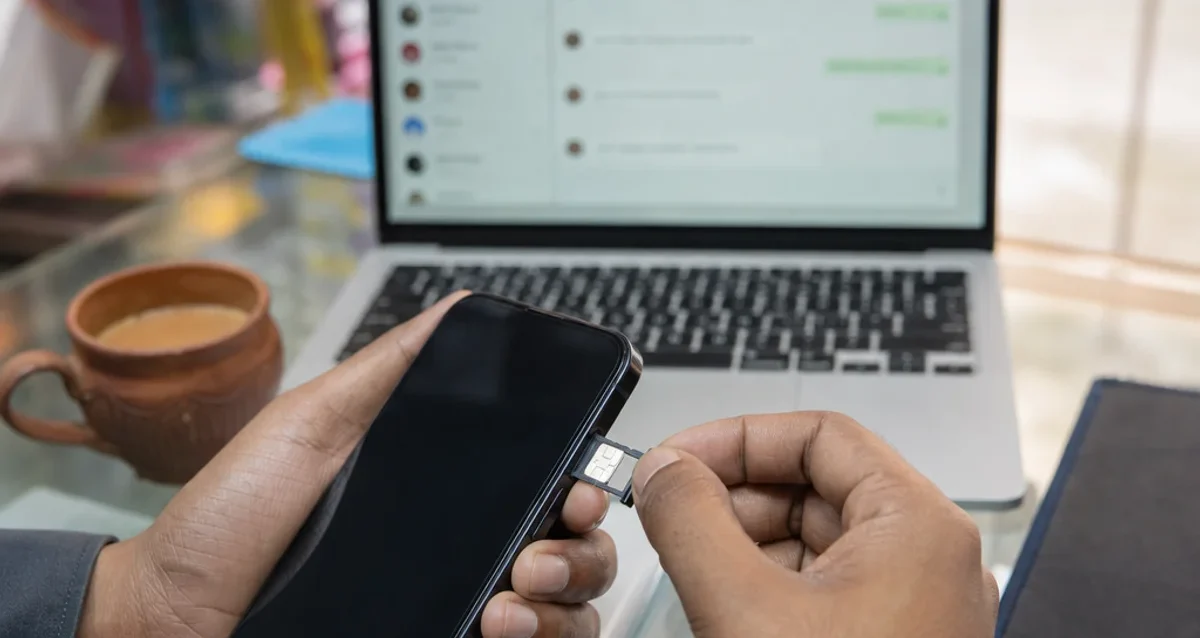
The Department of Telecommunications (DoT) has set 1 January 2027 as the start date for the WhatsApp SIM binding rule. After that, messaging apps such as WhatsApp, Telegram and Signal must work only when the SIM card registered to the account is inside the phone.
For a family chat, that is a small change. However, many small businesses in Madurai, Trichy, Tirunelveli and Ramanathapuram run sales and support from one WhatsApp number shared across phones, tablets and office computers. This guide explains the SIM binding rule for WhatsApp, who it affects, and how to keep customer chats running without disruption. We also compare the free app with the WhatsApp Business API.
What the WhatsApp SIM Binding Rule Says
As reported by Digit and an ETV Bharat report, the DoT extended the compliance deadline to 31 December 2026, so the WhatsApp SIM binding rule applies from 1 January 2027. The main points are:
- Messaging apps must work only while the registered SIM is present in the device.
- The rule covers WhatsApp, Telegram, Signal and other popular messaging apps used in India.
- International roaming is not affected as long as the registered SIM stays in the phone.
- Web and desktop sessions may be logged out when a risk check calls for it. The earlier plan for an automatic logout every six hours has been replaced with this risk-based approach, according to recent reports.
Why the Government Introduced SIM Binding
The goal is to fight fraud. Today, a scammer can register WhatsApp with an Indian number, remove the SIM and keep using the account from anywhere. Because the SIM binding rule ties the account to a SIM inside the phone, criminals will find it harder to misuse numbers for fake calls, phishing and investment scams.
For genuine businesses, that is good news in the long run, since customers can trust messages from local numbers more. Even so, it means changing a few daily habits.
How the WhatsApp SIM Binding Rule Affects Small Businesses
The businesses that feel the WhatsApp SIM binding rule most are the ones where the WhatsApp number and the phone holding its SIM are in different places.
| Common setup today | Risk from January 2027 | What to do |
|---|---|---|
| Business number’s SIM kept at home; staff use WhatsApp on another phone | The app may stop working on the staff phone | Keep the SIM in the phone that runs the app, or move to the API |
| One number open on WhatsApp Web on several office computers | Sessions may log out after risk checks | Plan for re-login, or use a shared team inbox on the API |
| Owner travels abroad with a local SIM in a different phone | Roaming is fine only if the registered SIM stays in the phone | Keep the business SIM in the WhatsApp phone while roaming |
| Old phone without SIM used as a counter device | Likely to stop working | Replace it with a proper team inbox |
WhatsApp Business App vs API Under SIM Binding

The free WhatsApp Business app runs on a phone, so it depends on the SIM in that handset. The WhatsApp Business API works differently: messages go through the official cloud platform, and your team replies from a shared web inbox or CRM, not from one handset. Therefore, the API is the usual way for teams to handle customer chats on many computers at once.
Final technical details from the DoT and Meta are still coming, so confirm with your provider before you change anything. Even so, if several people answer customers on one number, December is a sensible time to plan a move to the API.
Checklist Before 1 January 2027
Use this short list to prepare your team for the WhatsApp SIM binding rule.
- List every phone, tablet and computer that uses your business WhatsApp number.
- Find where the SIM for each WhatsApp number is today.
- Back up chats and save important customer contacts in your CRM.
- Decide whether one phone is enough or whether your team needs a shared inbox on the API.
- Tell staff about the change so nobody is surprised by a logout in January.
- Update the WhatsApp button on your website if you move to a new number or provider.
Services Mentioned in This Guide
- TicAte WhatsApp Business API
shared team inbox for one number - CRM services
keep customer chats and contacts in one place - WordPress website development
websites with WhatsApp chat widgets
Frequently Asked Questions
When does the WhatsApp SIM binding rule start in India?
The DoT extended the compliance deadline to 31 December 2026, so the rule applies from 1 January 2027.
Will WhatsApp Web log out every six hours?
The original order mentioned a six-hour logout, but recent reports say it has been replaced with a risk-based approach, where web sessions are logged out only when a risk check requires it.
Does SIM binding affect the WhatsApp Business API?
The API does not run on a phone, so teams use it from a shared web inbox instead of a handset. Confirm the final details with your API provider as the DoT and Meta publish more guidance.
Can I use WhatsApp abroad after SIM binding?
Yes. The DoT has said international roaming is not affected as long as the registered SIM remains in the phone.
Get Your Team Ready for SIM Binding
Zeocreate helps businesses in Madurai, Trichy, Tirunelveli and Ramanathapuram move customer chats to the WhatsApp Business API with a shared inbox, CRM and website chat widget. Tell us how your team uses WhatsApp today, and we will suggest the right setup.